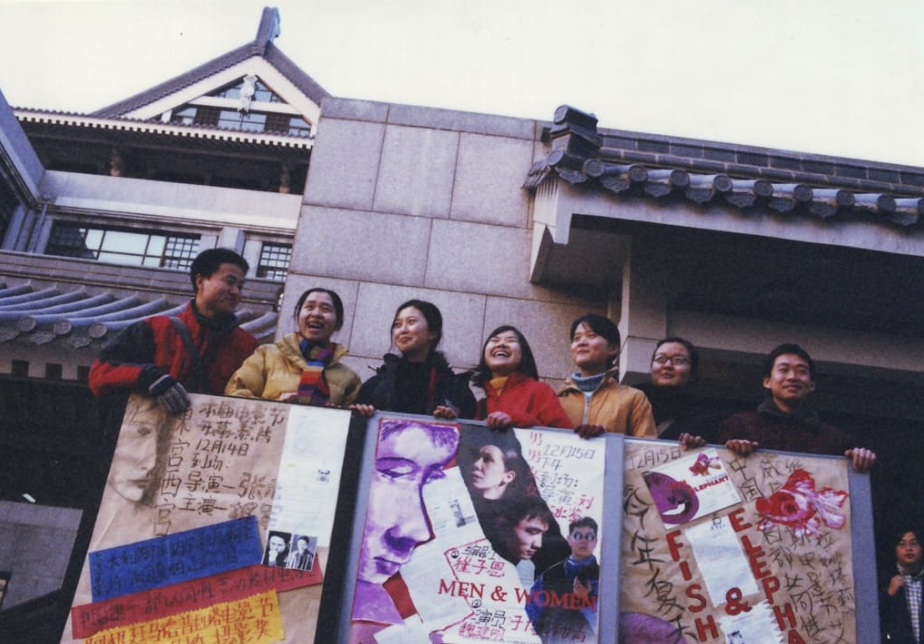
自1989年香港同志影展创办以来,酷儿影展在亚洲兴起,在为华语世界推广酷儿影像、提升性/别少数社群可见度方面扮演了重要的角色。同时,华语酷儿影像也在全球范围内广泛传播,并在离散社群中持续流通。酷儿影展为我们提供了一个思考酷儿性、影像与文化政治的重要场域。相较于全球LGBTQIA+电影节中的其他地区,华语酷儿影展的案例至今仍缺乏充分研究。
为弥补这一研究空白,本期《华语独立影像观察》将梳理华语酷儿影展的版图,并探讨其重要意义。我们提出以下问题:在不断变化的社会政治条件、基础设施与跨国网络之中,我们应如何理解华语酷儿影展的发展?除了身份政治、庆典式叙事以及西方电影节的模式之外,我们能生产出怎样的概念工具来分析这些影展?这些影展对酷儿理论、视觉文化与行动主义实践的发展又有怎样的贡献?
我们欢迎来自不同领域的投稿者——包括学者、策展人、影像作者以及艺术行动者——共同探讨华语世界的酷儿影展。选题包括但不限于:
- 华语世界酷儿影展的历史研究与回顾(例如:华语酷儿影像巡回展CinemaQ、香港同志影展、上海骄傲电影节、上海酷儿影展、酷儿东方影展、酷儿大学、酷儿漂浪 等);
- 参与塑造并维系酷儿影像文化的个人、机构与网络;
- 影展组织、策展、网络搭建与培训项目的幕后实践;
- 华语酷儿影像在主流或独立影展中的放映与策划;
- 生产与放映空间:酷儿影展如何鼓励并推动酷儿影像的创作与放映;
- 档案实践:酷儿影像如何通过个人与机构档案被保存、策展与传播;
- 观众、社群、受众研究与文化行动主义;
- 应对审查与资金限制的策略与方法;
- 在线平台与数字传播:媒体与技术如何推动酷儿影像的生产与流通;
- 华语酷儿影像与酷儿影展的理论化;
- 在特定社会、政治和文化条件下,华语酷儿影像如何生成其独特的观看、感受、叙事和批评方式;
- 亚洲各地酷儿影展的比较研究。
投稿形式:
来稿形式可以多样,包括但不限于学术论文、影展评论、批评性思考、导演访谈、导演手记以及关于创作实践的反思。我们鼓励作者探索并呈现自己独特的创作与思辨风格。欢迎参考本刊过往各期内容,以了解我们所发表作品的多样面貌。作为一本双语刊物,《华语独立影像观察》接受中文与英文投稿,我们将同时刊发文章原文及其译文。
我们接受以下几类投稿:
长篇学术论文:
围绕某一具体议题展开、具有原创研究内容和明确观点的学术文章。英文不超过 8,000词,中文不超过12,000 字,以上字数均含参考文献等所有内容。需提供完整学术引文,请遵循本刊体例规范。此类文章将采用同行评审。
评论性文章:
围绕某一影展、某部影像作品、某位导演/策展人,或与华语酷儿影像及影展相关的特定议题所写的批评性文章。通常篇幅为1,000至5,000词/字,但字数可适度灵活调整。参考文献并非必须,但鼓励提供。此类文章将由本刊编辑部进行编辑审读。
影展报告、回忆录、口述史、访谈及其他:
本栏目主要收录有关华语酷儿影展历史的一手记录与文献。文章长度不限。我们也欢迎其他形式的投稿,如创意性写作、摄影、艺术作品、短片与视频论文等。参考文献并非必须,但鼓励提供。此类文章将由本刊编辑部进行编辑评审。
我们希望能为录用稿件提供建设性的反馈,并期待投稿者在有限时间内认真考虑并回应编辑与评审意见,以使文章尽可能完善。
格式指南
请参阅华语独立影像资料馆网站上的期刊格式指南及过刊内容 https://www.chinaindiefilm.org/submission-guidelines/
关于 AI 使用
我们不鼓励使用 AI。若您在稿件准备过程中使用了任何AI工具(如 ChatGPT),请告知我们具体的使用方式。
投稿时间与方式
本期刊预计于2026年11月出版。为确保有充足时间完成同行评审、修改、双语翻译、编辑与校对,请于 2026年7月1日 前提交完整稿件。
投稿及相关咨询请同时发送至专题编辑邮箱:chinesequeer@protonmail.com,cifacontact@gmail.com。邮件标题请注明:CICO酷儿影展投稿
执行编辑介绍
吴漫是一位策展人、电影制片人、剧场创作者与研究者,关注华语酷儿电影、独立影像文化与档案实践。她现任北京酷儿影展轮值主席及组委会成员,并发起和推动跨区域放映、论坛及社群文化项目。作为志奋领学者,她也是“华语酷儿电影活档案”与《感觉档案》两个持续进行中的项目的发起人,致力于保存、整理并重新激活那些在审查、离散与历史断裂之下濒临消失的华语酷儿电影及其相关记忆。
朱柯现为阿姆斯特丹大学媒体研究系博士候选人。他的博士研究隶属于欧洲研究委员会资助项目“RESCUE: Resilient Cultures – Music, Art, and Cinema in Mainland China and Hong Kong”,主要考察当代华语酷儿电影文化。他曾在香港、阿姆斯特丹与柏林策划及组织酷儿电影放映项目与相关活动。
包宏伟博士现任英国诺丁汉大学媒体研究副教授。他著有《酷儿同志》、《酷儿中国》、《酷儿媒体在中国》、《当代华语酷儿表演》及《离散中的亚洲酷儿》,并共同主编《劳特里奇华语性别研究手册》、《当代华语酷儿艺术》,《华语世界酷儿文学》以及《华语影像期刊》酷儿影像专刊。
附录:关于《华语独立影像观察》
《华语独立影像观察》是一份对公众开放的双语电子期刊,在华语独立影像档案馆(CIFA)的网站上出版,并已被《现代语言协会国际书目数据库》(MLA International Bibliography) 收录。我们认为:严格的学术出版规则有时限制了青年学者分享见解的机会,也使很多实践者被边缘化,被仅仅当作“研究对象”。此外,语言壁垒与不同学术体系之间的差异,往往阻碍了学术群体之间的思想交流与互学互鉴。本刊试图打破这些界限,提供一个更为自由、突破规范的表达与交流空间。我们希望呈现更多大胆的声音与创新的思想,让实践者不仅能够为自己发声,也能主动参与有关他们的分析与讨论。同时,我们也致力于支持来自不同文化的年轻学者,向更广泛的受众展示他们的研究成果,使其获得更多的关注。
为进一步促进多元参与与协作办刊,自第7期起,CICO邀请有志的青年学者加入编辑团队。我们热忱欢迎未来期刊主题的提案,致力于支持个人或编辑团队开展选题构思与期刊编辑工作,共同拓展研究领域。提案应遵循本刊以往征稿启事的格式,并提交至 CIFA 官方邮箱:cifacontact@gmail.com。
Chinese Independent Cinema Observer Special Issue Call for Papers: Chinese Queer Film Festivals, edited by Jenny Man Wu, Andy Ke Zhu and Hongwei Bao
Following the founding of the Hong Kong Lesbian and Gay Film Festival in 1989, queer film festivals have proliferated in Asia. They played a vital role in promoting queer films and raising LGBTQIA+ visibility across the Chinese-speaking world. At the same time, Chinese-language queer films have travelled widely in the world and circulated within global diasporic communities. Queer film festivals provide a critical locus for theorising queerness, cinema, and cultural politics. The Chinese cases, however, remain largely underexamined compared with other locations in the global LGBTQIA+ film festival circuit.
To address this gap, a special issue of Chinese Independent Cinema Observer maps Chinese queer film festivals and theorises their significance. We ask: How do we understand the development of Chinese queer film festivals amid changing socio-political conditions, infrastructures, and transnational networks? What conceptual tools can we come up with to analyse these festivals beyond identity politics, celebratory narratives, or Western festival models? How do these festivals contribute to the development of queer theory, visual culture, and activist practices?
We welcome contributions from a range of voices—including scholars, curators, filmmakers, and artist-activists—to explore queer film festivals across China and the broader diasporic communities. Possible topics include, but are not limited to:
- Histories and retrospectives of queer film festivals in and outside China (e.g., China Queer Film Festival Tour, CinemaQ, Hong Kong Lesbian & Gay Film Festival, ShanghaiPRIDE Film Festival, Shanghai Queer Film Festival, Queer East Festival, Queer University, Queers Across the Waves);
- Stakeholder configuration: people, institutions and networks involved in creating and sustaining queer film cultures;
- Behind-the-scenes practices of festival organising, curating, networking, and training programmes;
- Programming of Chinese queer films in mainstream or independent festivals;
- Production and exhibition spaces: how queer film festivals encourage and facilitate queer filmmaking and screening;
- Archival practices: how queer cinema is preserved, curated, and circulated through personal and institutional archives;
- Audience, community, reception, and cultural activism;
- Strategies and tactics for navigating censorship and financial constraints;
- Online platforms and digital circulation: how media and technologies facilitate the production and circulation of queer films;
- Theorisation of Chinese queer films and queer film festivals;
- How Chinese queer films generate their own modes of seeing, feeling, storytelling, and critique under specific socio-political and cultural conditions;
- Comparative studies of queer film festivals across Asia.
Formats:
Submissions can take various forms, including but not restricted to academic essays, festival reviews, critical reflections, filmmaker interviews, director notes and reflections on creative practice. We encourage authors to explore their unique creative and intellectual styles. Please consult past issues of the journal to get a sense of the diverse range of content we publish. As a bilingual publication, Chinese Independent Cinema Observer accepts submissions written in both Chinese and English. We will publish articles in their original version and in translation.
We accept submissions in the following categories:
Full-length scholarly article
Scholarly articles focusing on a specific topic and featuring original research and clear arguments. No more than 8,000 words in English, or 12,000 words in Chinese, all inclusive. Full scholarly references are required. Please follow the journal’s style guide. Scholarly articles in this category will be peer reviewed.
Critical essays
Critical essays about a festival, a film, a filmmaker/curator, or a specific topic related to Chinese queer films or film festivals. Articles in this category will typically be 1,000-5,000 words long, but there is some flexibility for the word count. References are not essential but encouraged. Articles in this category will be desk reviewed by the journal’s editors.
Festival reports, memoirs, oral history, interviews and miscellaneous
This section features first-hand documentation of Chinese queer festival history. Articles are variable in length. Alternative formats such as creative writing, photographs, artworks, short films and video essays are also considered. References are not essential but encouraged. Articles in this category will be desk reviewed by the journal’s editors.
We hope to offer constructive feedback to accepted submissions and expect contributors to consider and act on the editors’ and reviewers’ feedback to make the article as strong as possible within a limited timeframe.
Style guide:
Please refer to the Chinese Independent Film Archive website for journal style guides and past issues. Overall, we use the Harvard author-date style in English, British spelling and punctuation.https://www.chinaindiefilm.org/submission-guidelines/
Use of AI:
Use of AI is discouraged. Please let us know if you have used any AI tools (e.g., ChatGPT) and if so, in what way, in preparation for your manuscript.
Submission:
We hope to launch this special issue in November 2026. To ensure adequate time for peer reviewing, revision, bilingual translation, copyediting and proofing, please submit your full article by 1 July, 2026.
Submissions and enquiries should be sent to three editors of this issue at chinesequeer@protonmail.com and cifacontact@gmail.com at the same time, with the heading of ‘CICO Special issue submission’.
About the Executive Editors:
Jenny Man Wu is a curator, film producer, theatre-maker, and researcher whose work focuses on Chinese queer cinema, independent moving-image culture, and archival practice. She is the director on duty and committee member of the Beijing Queer Film Festival, while developing cross-regional screenings, panel discussions, and community-based cultural initiatives. A Chevening Scholar, she is also the initiator of The Living Archive of Queer Cinema in Chinese Context and The Unheard Echoes, two ongoing projects dedicated to preserving, organising, and reactivating Chinese queer films and memories at risk of disappearance due to censorship, diaspora, and historical rupture.
Andy Ke Zhu is a PhD candidate in the Department of Media Studies at the University of Amsterdam. His PhD research, as part of the ERC-funded project “RESCUE: Resilient Cultures – Music, Art, and Cinema in Mainland China and Hong Kong,” examines contemporary Chinese queer cinema culture. He has curated and organised queer film programmes and events in Hong Kong, Amsterdam, and Berlin.
Dr Hongwei Bao is Associate Professor in Media Studies at the University of Nottingham, UK. He is the author of Queer Comrades, Queer China, Queer Media in China, Contemporary Chinese Queer Performance, and Queering the Asian Diaspora. He also co-edited Routledge Handbook of Chinese Gender and Sexuality, Contemporary Queer Chinese Art, Queer Literature in the Sinosphere, and Journal of Chinese Cinemas special issue on Queer Chinese Screen (vol. 17, no. 1).
About Chinese Independent Cinema Observer:
Chinese Independent Cinema Observer (CICO) is an open-access, bi-lingual e-journal published on the Chinese Independent Film Archive (CIFA) website and is indexed in the Modern Language Association International Bibliography (MLA) database. We believe that rigid academic publication rules can sometimes limit young scholars’ opportunities to share their insights and also marginalise practitioners, reducing them to mere ‘research subjects’. Furthermore, language barriers and differing academic systems often hinder the exchange of ideas and mutual learning among academic communities. This journal is therefore dedicated to breaking these boundaries by providing a freer, rule-defying space for expression and exchange. We hope to bring bold voices and innovative ideas to the forefront, giving practitioners the opportunity to speak for themselves while also engaging with the analyses about them. At the same time, we strive to empower emerging scholars from diverse cultures by showcasing their work to a broader audience.
To further foster diverse participation and collaborative curation, starting from Issue 7, CICO invites aspiring young scholars to join its editorial team. We warmly welcome proposals for future thematic issues and are committed to supporting individuals or editorial teams in developing ideas and editing journal issues, jointly expanding the scope of inquiry. Proposals should follow the format of the journal’s previous calls for papers and be submitted to the official CIFA email: cifacontact@gmail.com.