PISCES
鱼
王嘉烨 Scarlett (Jiaye) Wang|关阳月泽 Yueze Guan Yang
2025|抽象一点 A Bit Abstract
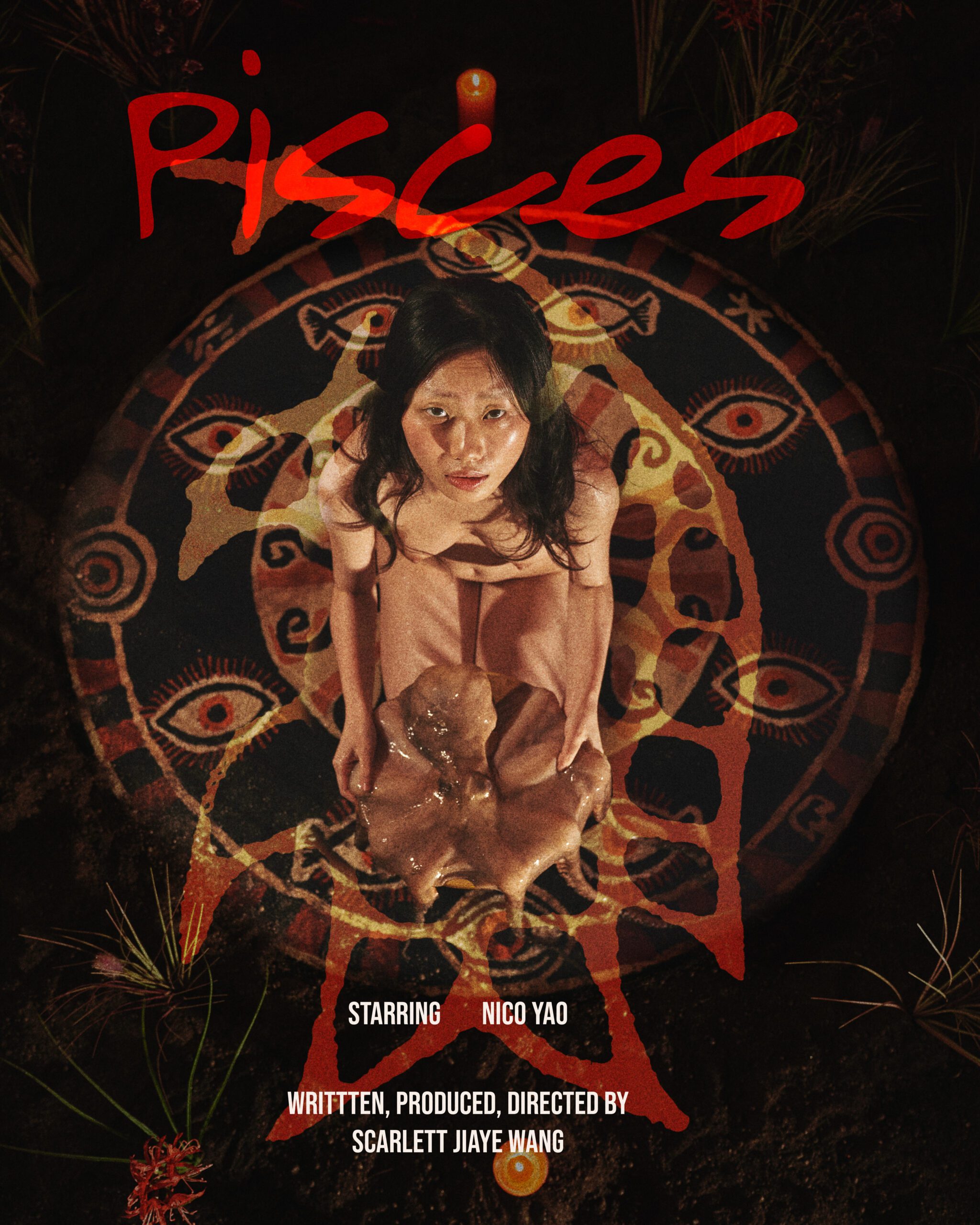
《鱼》是一部9分钟的艺术短片,探索仪式、身份与转化。影片开篇,一位孤独却拥有异常天赋的女孩坐在同伴中间,红色的辫子系在她的喉间。她被嘲弄与戏谑,最终如离水之鱼般倒下,在孤立中痉挛。
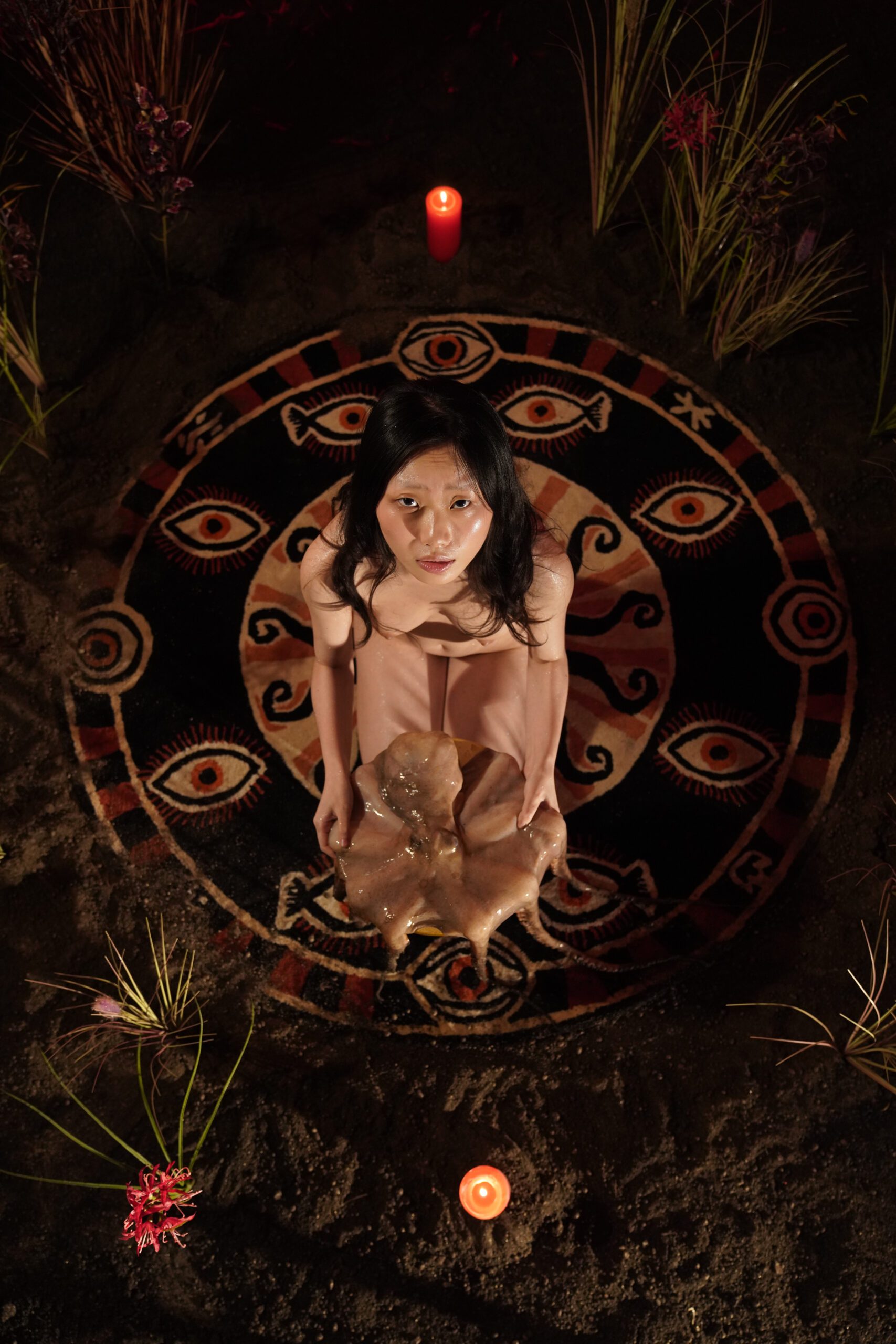
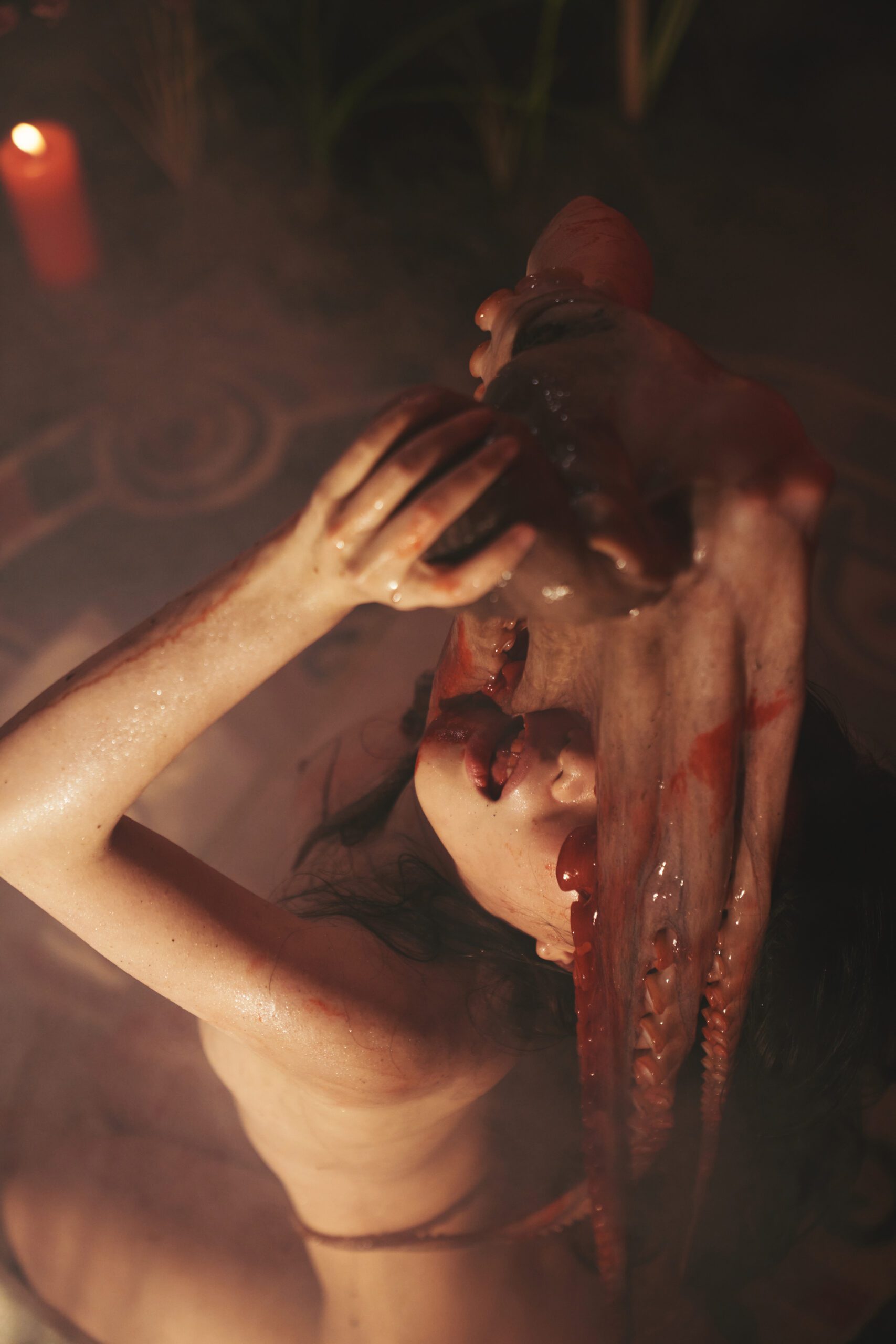
独处时,她点燃火焰,焚烧自己的衣物——仪式由此开始。蜡烛、地毯与章鱼勾勒出祭仪的场域。鲜血在她的脸庞蔓延,章鱼的触须与她交缠,形成一种奇异而亲密的交流。
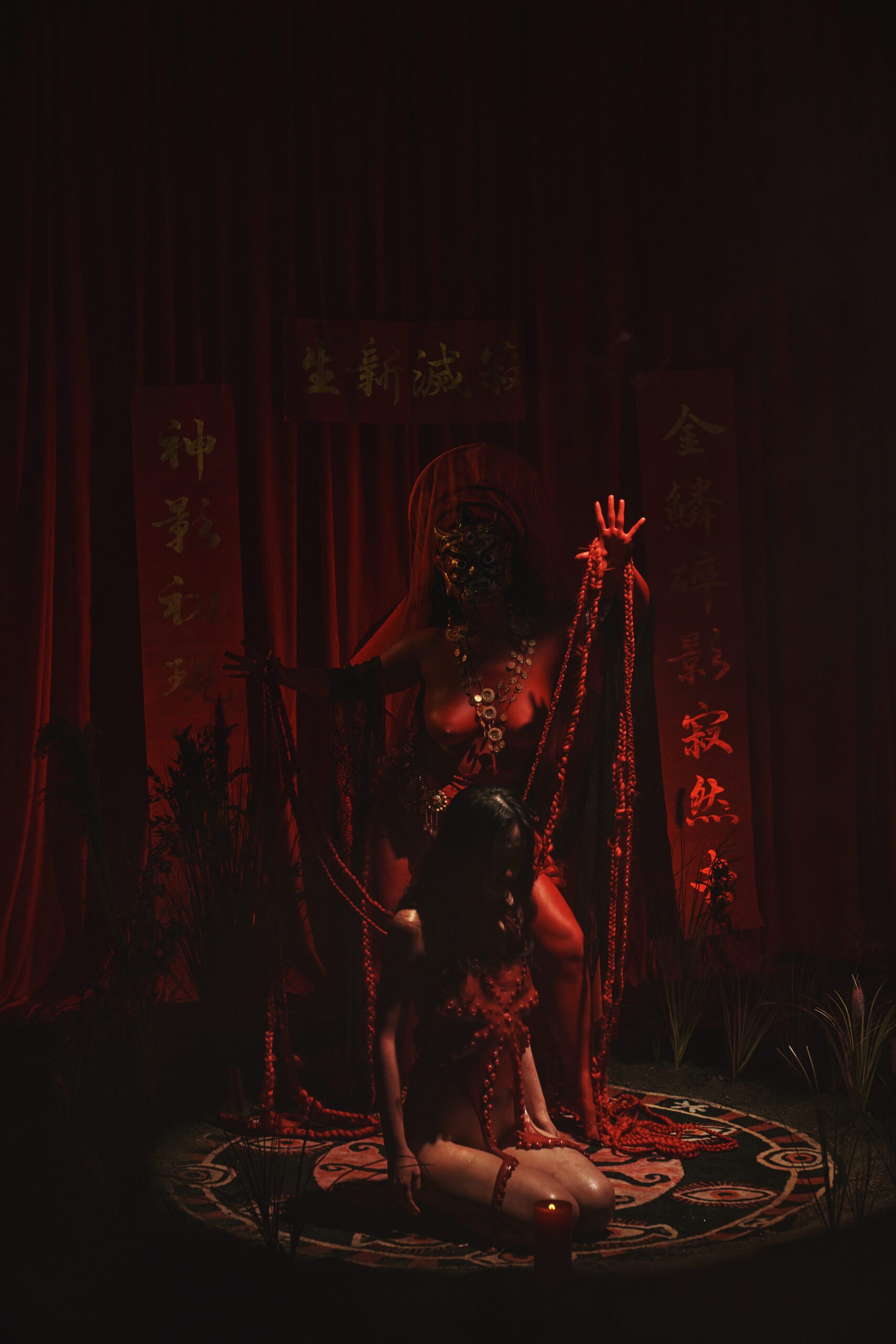
一位神明回应了她的呼唤:一位赤肤的使者降临。女孩的子宫化作鱼卵的图腾,使者在她的身体上舞动,将血液、呼吸与发辫编织在一起。在无言而狂热的高潮中,女孩被处决。
最终,她从原初之水的池中重生。她的面庞破水而出,化为一个全新的、充满力量的存在。
《鱼》汲取了洛夫克拉夫特神话、中国民间仪式、五行理论以及艺术家自身的亲密经历。通过“邪典”美学的视觉语言,影片描绘了一场心灵整合的过程——阴影、阿尼玛与自我的三位一体。
Pisces is a 9-minute art film exploring ritual, identity, and transformation. The film opens on a lonely yet eerily gifted girl seated among her peers, a red braid tied at her throat. Taunted and mocked, she collapses like a fish out of water, convulsing in isolation.
Alone, she lights a fire and burns her clothes. The ritual begins. Candles, carpets, and an octopus mark the ceremonial space. Blood spreads across her face; the octopus’s tentacles entwine with her in a strange, intimate communion.
A god answers her call: a red-skinned emissary descends. The girl’s womb becomes a totem of fish roe; the emissary dances upon her body, interweaving blood, breath, and braids. In a wordless, feverish climax, the girl is executed.
At last, she is reborn from a pool of primordial water. Her face breaks the surface, emerging as a powerful new being.
Pisces draws from the Lovecraftian mythos, Chinese folk ritual, Five Elements theory, and the artist’s own intimate history. Through the visual language of cult aesthetic, it portrays a process of psychic integration—a trinity of shadow, anima, and self.
导演:王嘉烨、关阳月泽
编剧:王嘉烨
主演:姚欣宜
制片人:王嘉烨
摄影:王嘉烨、左浩辰、刘宇辰
类型:实验短片
时长:9分钟
完成时间:2025年
Director: Scarlett (Jiaye) Wang, Yueze Guan Yang
Screenwriter: Scarlett (Jiaye) Wang
Cast: Nico (Xinyi) Yao
Producer: Scarlett (Jiaye) Wang
Cinematographer: Scarlett (Jiaye) Wang, Haochen Zuo, Yuchen Liu
Genre: Experimental Short Film
Length: 9 min
Year: 2025
王嘉烨 Scarlett (Jiaye) Wang
王嘉烨(2002年生于北京)是一位常驻伦敦的跨领域艺术家,主要从事艺术电影、表演创作与策展。她的作品汲取中国及东亚的文化遗产、民间与宗教仪式,以及酷儿女性经验,以诗意与形而上的美学探索身份、身体与灵性。
在梦境与民间叙事的交织中,王嘉烨营造出某种神圣而“尚未到来”的感官记忆。她是伦敦激进酷儿艺术活动 WAKE UP的发起人,其作品已在国际范围内展出。近期荣誉包括:2025年都柏林布鲁姆日电影节“最佳国际实验短片奖”、2024年巴黎ASVOFF16“最佳学生电影奖”,以及2023年西贡实验电影节“观众选择奖”。
Scarlett Wang (b. Beijing, 2002) is a London-based curator and multidisciplinary artist working primarily in art film and performance. Drawing from Chinese and East Asian cultural heritage, folk and religious rituals, and queer-feminine experience, her work explores identity, embodiment, and spirituality through poetic, metaphysical aesthetics.
Blending dream states with folktale narration, Wang crafts sensorial memories of something sacred and “not yet there.” She is the founder of WAKE UP, a radical queer art event in London. Her work has been presented internationally. Recent awards include Best International Experimental Short (Bloomsday Film Festival, Dublin, 2025), Best Student Film (ASVOFF16, Paris, 2024), and the Audience Award (Saigon Experimental, 2023).

导演阐述 Director’s Statement
《鱼》起初是一场私密的仪式——对过往爱情、痴迷、毁灭与重生的诗性反思。这部短片交织了两条兴趣脉络:我的前任(女主角)对克苏鲁神话与毁灭性性欲的执念,以及我自身持续进行的对中国民间信仰、傩祭与五行哲学的探索。在我们分手四年后第一次深入交谈之后,我试图将这场迟来的相遇转化为一个通过艺术得以施行的仪式。
在影片中,我化身为神的使者,引导并完成她向章鱼神的献祭。创作过程逐渐演变为我们现实关系的潜意识投射:它的终结映照为一次象征性的血祭——对她而言在当时是情感上的毁灭,但也开启了她走向修复与心理重建的旅程。回望时,我逐渐以荣格的语汇去理解这部作品:使者(阿尼玛)与章鱼神(阴影)并非与主角对立,而是同一灵魂中尚未整合的两个面向。神与女孩并非分离,他们构成三位一体。通过对黑暗的探索,她实现了内在的重生,成为一个更完整的自我。
《鱼》标志着我生命中的一个里程碑。它借助神话与邪典电影的语言,呼应了贯穿我创作实践的母题:仪式作为通往潜意识与自我的桥梁。这样的仪式必须是肉身性的,就像生命中无法避免的断裂与苦难。而当我们选择投入那些所谓“邪典”与开放于个人诠释的仪式时,我们重新夺回了书写自身命运的权力。
Pisces began as a private ritual—a poetic reflection on former love, obsession, destruction, and rebirth. The short film weaves together two threads of interest: my former partner (the protagonist)’s obsession with the Cthulhu mythos and destructive sexuality, and my own ongoing exploration of Chinese folk religion, Nuo ritual, and Five Elements philosophy. After our first deep conversation in four years following our breakup, I sought to transform that belated encounter into a ritual enacted through art.
In the film, I embody the divine emissary who guides and completes her sacrificial offering to the octopus god. The creative process became a subconscious projection of our relationship in real life: its ending mirrored a symbolic blood sacrifice—emotionally devastating for her at the time, but also the beginning of her journey toward repair and psychic reconstruction. In retrospect, I came to understand the work through Jungian terms: the emissary (Anima) and the octopus god (Shadow) are not oppositional to the protagonist, but two unintegrated aspects of the same psyche. God and girl are not separate; they form a trinity. Through exploring the darkness, she achieves an inner rebirth and becomes a more complete self.
Pisces marks a milestone in my life, using the language of myth and cult cinema to echo themes that recur throughout my practice: ritual as a bridge to the unconscious and the Self. Such rituals must be visceral, just like the ruptures and suffering we cannot avoid in life. And when we choose to engage with so-called “cults” and rituals that are open to personal interpretation, we reclaim the authorship of our own destiny.